Hoteliers, find out who your real guests are! part 1
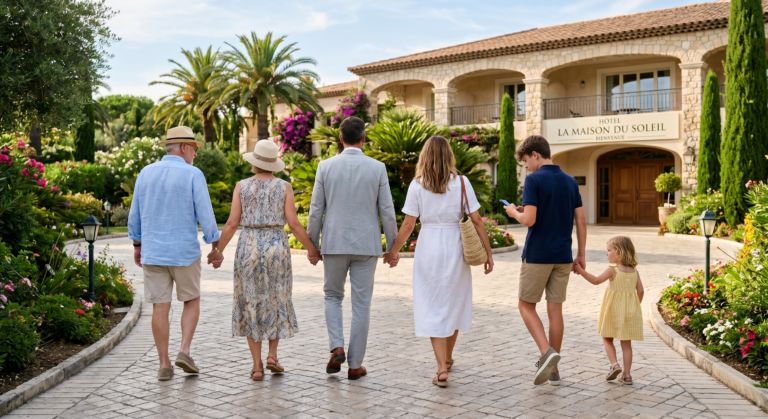
Hoteliers, find out who your real guests are!
Each traveller has his own specific characteristics…
Here we are, the most crucial part of any business: who is the person in front of you? It seems simple at first. But when you take a closer look, you soon realise that getting to know your customers avoids many unpleasant surprises and brings maximum benefits!
Surprisingly, it’s the “marketers” who are most familiar with the art of knowing who you’re talking to. In fact, they have a very “off-putting dirty word” for it: market research. You have to admit that it’s paradoxical that a profession that’s supposed to understand everything about people should have created such a cold, depersonalised word!
Let’s leave the academic aspect to them and add the real touch of the hotel business: a love of people. Are you ready? Experience has prepared a whole series of articles with just one objective: to structure your innate knowledge of people in order to increase their satisfaction and, dare we say it, your income!
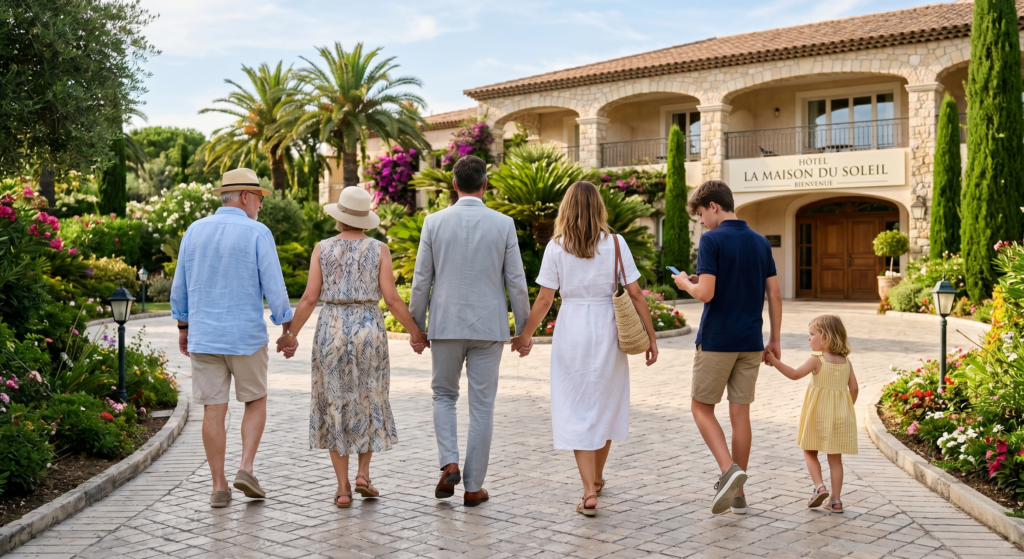
What is a traveller?
Have you ever noticed that to improve in any area, the first thing to do is to unlearn what you think you know?
Let’s unlearn together!
A traveller is :
- Someone who is travelling.
- A person who travels to see new countries (for the purpose of discovery or study).
- A person who frequently travels outside their country, region or place of residence.
- etc. etc.
What does it all have in common? He’s a human being!
And this human, just like you or your loved ones, has particular desires.
The dirty word ‘segmentation‘ (grouping customers according to social criteria) has made us lose sight of a fundamental truth: we don’t know what our guests want when they walk through the door!
“A businessman wants wifi. A tourist wants a map of the city. A mother wants an early check-in.”
These are just slogans, not absolute truths.
You need to get in touch with your hotel customer to find out what they really want. Of course, there are broad trends. And the more you get to know your guests on an individual basis, the better you’ll be able to predict the needs of future arrivals. But nothing can replace personal contact.
It’s often forgotten, and in other sectors it’s no big deal. But in the hospitality industry, let’s put things back into their proper perspective!
You are a human being (a warmer than average human, in fact, for having chosen this profession) who welcomes other human beings. Each person is different. Only a genuine and unique interest in each of them will win you the jackpot: a loyal customer!
How can we understand guests better?
After this long speech advocating individual knowledge, let’s take a look at the tools that can help you approach each customer (and your staff, for that matter, but that’s the subject of another article 😉 ) with greater peace of mind.
It’s a fact: without direct interest, it’s impossible to know what your guest wants. On the other hand, if you have a better understanding of their cultural background, it’s much easier to anticipate their needs!
Usually, we segment by “Business, Tourism, Family or Couple“. We only look at the reason for the trip. Sometimes we only segment by booking channel. Booking.com customers come for Leisure, Expedia customers for Business, and so on.
At Experience, we’ve decided to look at it from a completely different angle!
What if, to better understand your customer, you first had to understand the era in which they grew up?
Would it then be possible to satisfy a 65-year-old businessman who loves to receive a wake-up call in the morning (a sign of luxury in his eyes), while at the same time satisfying the 25-year-old start-up founder, who will find this call intrusive but will love unlocking his room with a QR code?
That’s the ultimate goal: overall satisfaction! And to achieve this, the generational context changes EVERYTHING.
X, Y, Z generations, Boomers… But what does it all mean?
Don’t worry, it’s all very confusing! That’s why a quick recap is in order.
Fun fact: Did you know that the generation before the Second World War was called “The Silent Generation”? Hoteliers had it easy in those days! All you had to do was keep a clean hotel property, provide a comfortable bed and have polite staff and you were in business.
Then the war ended. Hope was reborn and the future looked bright. Work was seen as beneficial, and economic growth exploded. These were the “Boomers” (born between 1946 and 1964).
Next come those born between 1965 and 1980: X Generation. Unpredictable, they are determined to break the rules. Although they were not born with digital technology, they cherish their autonomy and distance themselves from tradition.
From 1981 to 1996, it was Y Generation (the Millennials). They saw the birth of the Internet, Google and unlimited access to information. They question the world and are keen to support what makes sense and has a positive impact.
From 1997 to 2012 came the Zoomers (Z Generation). For them, everything has to move fast, and life without a smartphone is not an option.
And last but not least: Alpha Generation (born after 2012). These are the people who influence today’s consumers and whom we seek to satisfy by any means necessary. They no longer have to endure the strict upbringing of “Talk is silver, but silanec is gold”, but instead have strong opinions on everything, despite their young age.
From there, we can easily deduce the best way to approach everyone’s expectations. Because while every request is different, your team can be ready to respond in the right way.
Let’s put it this way: a 70-year-old couple arrive at your hotel. They’ll love it when the receptionist introduces himself, calls them by their surname and offers them a welcome drink, which will be taken up to their room in around twenty minutes.
You might say to me: “But all guests would appreciate that! Yes… and no.
A 25-year-old couple (Gen Z) will no doubt prefer to be called by their first names and have their drinks available directly from the counter, even if it means enjoying them in the lobby rather than in their room.
Obviously, human qualities are not optional in hospitality. But it’s the way you express them to the person in front of you that will score you points!
Say, a CRM wouldn’t help by any chance, would it?
You’re taking the words right out of my mouth!
This is exactly the purpose of a CRM: to enable you to develop your hotel business without losing that personal contact, even when it becomes humanly impossible to know each customer individually.
Let’s take a CRM at random… let’s say… Experience! 😂
It will enable you to contact your guests before their arrival to gather this valuable information. Information that will help your team to prepare a tailor-made stay, whatever the guest.
But as any tool, no matter how ingenious, is only as effective as the people who know how to use it, we have prepared a series of articles to help you pinpoint your customers’ expectations.
See you soon!